Showing posts with label hockey help. Show all posts

Tuesday, February 2, 2016

Why You Have To Podcast


Now, while the article that sparked this post was released on January 27, 2016 -- only days ago, I have news for the author of that piece:  I put my very first podcast online on a Wednesday night, October 31, 2007  In fact, "My Hockey Secrets" aired online once per week until I had to close my Whitman, MA studio to move south three years ago.  Even that chaotic move didn't stall my belief in podcasting, though, because I eventually began a Florida-based version dubbed "Dennis Chighisola's Hockey Secrets Podcast" on Sunday, November 23, 2014.

Okay, so suddenly -- in early 2016, an article appears in an online sports mag announcing:


:)  Better late than never?  No, not really.  I understand what the author was trying to say, because pro athletes aren't exactly Internet marketing gurus -- who have been podcasting for a lot longer than I, they're not business people (in the way we usually define business people), and they're not even advice-sharers (perhaps like this old hockey coach).

Getting closer to what was meant, that article began with, "While sites like Players’ Tribune and Uninterrupted look to create a player’s voice in the printed word or the visual, the spoken word in the form of podcast may be taking hold as well as a medium for regular expression, and even news."  And that piece went on to explain how "... L.A. Clippers veteran guard J.J. Redick would become the first NBA player (and only the second active pro athlete, joining A.J. Hawk) to take on a podcast during the regular season."

Except for following my boyhood favorites, the Boston Celtics (along with other Boston or New England-based sports teams), I'm not that much into b-ball.  None of us have to be, however, in order to get the gist of that article, in that podcasting can be super-helpful to anyone who wants to become better known or better understood by a broader audience.

A couple of interesting asides my readers might not have considered to date...
Ever awake on a Saturday or Sunday morning to your favorite radio station broadcasting shows featuring either a local lawyer, a local gardener, a local estate planner or a local auto repair shop?  I know those shows' hosts share a lot of valuable information with their listeners, but I'm also going to suggest that they border on being pure infomercials.  Trying to put a nicer spin on this, though, let's just say that they do share a lot of useful info, while at the same time hoping you'll have learned to like them, and hoping you might even call them the first time you have a related problem.

How about tuning in to your favorite radio or TV talk show, and hearing or seeing a favorite celebrity interviewed?  Actually, that's also a two-way street, in that the celebrities and hosts entertain us a ton as they interact, while the celebrity gets to hype his or her latest book, movie, CD or what have you.  (If you think about it, neither a radio or TV show could afford to pay for a famous actor to visit, for a pop idol to sing a song, or for a politician to make an appearance; but those types surely will go on a popular show -- for free, based on what's really at stake.) 
If you get my drift here, such shows -- be they on radio or television -- are aiming to suit a bunch of needs -- from their own to their advertisers' to their guests' to those of their listeners.

Now, tooting my own horn here for a few secs, new readers should know that I recently created the first ever online radio station that's basically all hockey talk.  I say "basically", because Hockey Talk Radio mixes in some awesome rock music during show breaks, and it also includes a number of instructional podcasts that aren't specifically about hockey -- like shows on diet or nutrition, exercise, mental training and more.

I tell you all this to also let you know that it hasn't been all that easy to fill 24-hours per day with quality shows.  Oh, I've managed, and I do have some awesome shows involved.  But what surprised me was how few people there are out there who are podcasting meaningful stuff.

For example, I thought it might be an unbelievable idea to have a hockey equipment specialist do something like a 15-minute segment per week -- on gear selection, on skate sharpening, and anything else the typical hockey family wrestles with on a regular basis.  And, although I belong to a Facebook group that includes hundreds of hockey pro shop specialists, I've yet to get one taker to run a podcast. 

You might think it would be easier for me to find guys or gals to share tips on hockey skills and coaching, but that hasn't been the case, either.  No, to date, only Jeremy Weiss and I do that (although I have been fortunate to feature a couple of great goalie coaches in Mike McCarthy, Justin Johnson and Chris Dyson.)

And, while I think we have one of the best motivators when it comes to physical training -- in one Gino Arcaro, I can't believe I haven't yet found someone to advise our listeners on specific exercises for hockey, training methods and such.
Smiling to myself a bit, I'm recalling about a decade ago, back in the Boston-area, when a local radio station dared switch to an all-sports-talk format.  They got bashed pretty good in the beginning, and the popular opinion was that such a format would never fly.  LOL!  Go through the AM radio listings today, however, and you'll find them all over the dial and all over North America.  My point -- and the point of that cited article, is that podcasts are here to stay.  And, let me add that, so is online radio.
Then, the article that got me going had something else I found interesting, and very much worthy of sharing.  For, "... podcasting as a medium is not new but it is certainly fast-growing across all genres. Podcasts like 'Serial' garner thousands of downloads and a cult following while Bill Simmons’ podcast quickly became a must-listen on any device for fans of sports and pop culture. With an audience now growing accustomed to listening as part of storytelling, it’s an easy one on commuting, walking, going to gym; audio is becoming big business."

Ya, "With an audience now growing accustomed to listening as part of storytelling, it’s an easy one on commuting, walking, going to gym; audio is becoming big business."  (I listen to Hockey Talk Radio on my laptop as I work, and then I use a free app to listen on my phone as I'm out and about.)  So, while I'll take the arrows in the back that come with being an innovator, I'm kind proud of the fact that I've created another first in an around-the-clock, all-hockey talk, online radio station.

Lastly, as most of the above suggests, there are still plenty of voids to be filled in a brand new field.  The online world is waiting for more knowledgeable people to share what they know, to stake claim to some notoriety, and to truly help advance their area of expertise.  And, if it has to do with hockey, I'll be here to help however I can.

*

PS:  I was actually lured to Florida to be the GM and head coach of a new Junior team in a newly proposed Junior league.  How that all fell apart is an entertaining story, to say the least.  Still, what I discovered from Day One on the job was that the biggest challenge to building such a program is in recruiting good players.  Of course, making sure your program or league is well known around the hockey world is a step in the right direction, which has organizations going to great lengths -- and great expense -- to accomplish just that.  So, you can imagine how I smiled when someone from one North American Junior league recently contacted me about maybe doing a weekly show highlighting their players and teams.  "Oh, man," I thought, "wouldn't I have loved to have put my planned team on the map with such ease!"      

*

Want to read the cited article?  Just click here:   "The Podcast Era For Athletes Has Started And J.J. Redick Is First To Create A Louder Voice"

*

Many friends have been asking lately about adding a Hockey Talk Radio player to their hockey blogs and sites, and I tell them it's easy and powerful.  I just provide the code, the player looks just like the following one, and anyone visiting the site can hear the station -- 24/7 -- just by clicking the arrow...

Monday, January 18, 2016

Procrastination: It's Killing Me (And You)!

Ugh...  Procrastination.  Whether it's in the front of our minds or not, I think it's always there, at least often -- and to some degree -- affecting all of us.

Up front, you ought to know that I wasn't looking for help in that area when a link to a lifehacker article arrived in my inbox yesterday.  Actually, it wasn't the "Procrastination" part of its title that jumped out at me, but instead the hidden reference to Aristotle -- as in "The Akrasia Effect" -- that did.

Ya, Akrasia...  As the article states, "... ancient Greek philosophers like Socrates and Aristotle developed a word to describe this type of behavior: Akrasia."  And the author went on to describe it as "the state of acting against your better judgment.  It is when you do one thing even though you know you should do something else."  Mr Clear goes on to say that, "Loosely translated, you could say that akrasia is procrastination or a lack of self-control." 

What caused me to read even further was the author's suggestion that, "Akrasia is what prevents you from following through on what you set out to do."

Who me -- not following through? 

Ya, me, and you, too...

In what proved to be a well written, easy-to-read piece, James Clear goes on to explain that it's really not our fault, but more a matter of how the human mind works.  On the one hand, we picture some well intended long range plans, with every intention of attaining them.  On the other hand, Clear says that our brains -- kinda in the now -- prefer instant rewards rather than long-term payoffs.  If we're talking diet here, we might envision a slim, trim body, while our brain at the moment is craving a triple-decker sandwich.  Our long-term reasoning might also dream about the benefits of finishing a profitable project as soon as possible, while our thinking in the now undermines that with the urge to spend the next few hours on a computer game.

Does that resonate with you?  I know it describes my way of procrastination to a "T"!

All is not lost, though, because Clear offers an antidote to Akrasia, with 3 Ways to Beat Procrastination (which I'll paraphrase below)...

Strategy 1: Design Your Future Actions

In a way, I think this should have been titled "How To Undermine Your Underminers" -- :) .  In other words, if those huge sandwiches are your downfall, the wise thing might be to undermine such an urge by having only healthy foods available.  If you know that computer games are your undoing, delete them from your computer (hey, you can always bring them back as a reward for getting the most important work completed).

For sure, your aims and underminers might be different than I've mentioned, but they can be attacked in similar ways.  The main idea is to short-circuit the things you know hurt you, and to give them less opportunities to get in your way.

Strategy 2: Reduce the Friction of Starting

Clear begins this section by quoting Eliezer Yudkowsky, as in, “On a moment-to-moment basis, being in the middle of doing the work is usually less painful than being in the middle of procrastinating.”

Hmmmmmm...  Were truer words ever spoken?  I think not!

Of course, what Clear and Yudkowsky are both getting at is that the work isn't usually all that hard, but the getting started is.

With that, I'm going to refer to something I've written quite a bit on during my years in hockey coaching...  For, I tell other coaches that my springs and summers each year -- or my hockey off-seasons -- were all about retreating to my "bunker" to design the next season's coaching plans.

Interestingly, that's one area of my work where I instinctively knew the work was a blast, but getting started could be a headache.  So I purposely put everything I needed for that work in a shoulder bag that could be grabbed instantly, and toted to a place where my creative juices could ultimately really get flowing.  I went one better on the latter, too, knowing from experience that atmosphere was everything.  Some of my best coaching ideas came about while walking a beach, driving through mountains, lolling at poolside, or soaking in a hot tub.  Back home in Massachusetts, the everyday or every night bunker was a neat area I built in my backyard, while down here in Florida I prefer poolside or a quiet lanai.

My point, though:  Find a comfortable place to work if you can, and have an easy way to get to work almost immediately. 

Clear ends this segment by suggesting, "Put all of your effort and energy into building a ritual and make it as easy as possible to get started.  Don’t worry about the results until you’ve mastered the art of showing up.:    

Strategy 3: Utilize Implementation Intentions

Clear says that, "There are hundreds of successful studies showing how implementation intentions positively impact everything from exercise habits to flu shots.  In the flu shot study, researchers looked at a group of 3,272 employees at a Midwestern company and found that employees who wrote down the specific date and time they planned to get their flu shot were significantly more likely to follow through weeks later."

So, what he's suggesting is that we set things like a specific date, place and time to implement our future plans.   And he finishes with, "... implementation intentions can make you 2x to 3x more likely to perform an action in the future."

*

Then, four things in closing...

1) I'm going to add one more strategy to those outlined by James Clear -- call it:

Strategy 4: Tell Someone Else About Your Intentions

Beginning this January 1st, I decided to do something unique for the first time ever, this having to do with my so-called New Years resolutions.  Ya, what I've done is post something like the nearby photo every single day (that's not the specific new home I'm seeking, so I rotate several pics).  If you get what I'm really doing, I'm telling my 16,000+ social media friends what I'm shooting for, and I know I'll be rather embarrassed if I don't attain that portion of my dreams sometime during 2016.  You might not want to blast your aims all over the Internet, but even telling a friend or two could bring about the same effect.

2) Because all of our long-term goals are different, the above strategies obviously have to be adjusted to meet our own needs.  So will you have to analyzing your failings, or those things you know are delaying you from getting to work.  There definitely isn't a one-size-fits-all with the above process, but it doesn't seem all that difficult to adjust.

3) Interestingly, I think, is that just reading that article seems to have changed me quite a bit.  I mean, knowing what's happening in my brain -- or knowing that it's a human problem -- eases my conscience more than a little.  I especially feel helped by understanding my need to get over the typical delays and just get to it.

4) I'm re-introducing one of my favorite Internet gurus here -- Sean D'Souza was the feature of an earlier post having to do with attaining "happiness".  Below you'll find a link to an awesome audio about procrastination by Sean.  What I love about this one is mentioned in the title, "The 70% Principle..."  For, what he's suggesting is that, "If a job is worth doing, it’s worth doing 70% right."  :)  That's right, because it's our search for perfectionism that's killing us a lot of the time, and it's also one of the reasons we put off starting -- as if we're not quite ready to do it perfectly yet.

Here's a link to Sean D'Souza's audio -- give a listen when you get a chance (it's worth it):   "The 70% Principle: Why It Knocks Procrastination Out of the Ball Park".

*      

If you'd like to read James Clear's article in its entirety, just click here:  "The Akrasia Effect: Why We Make Plans but Don't Follow Through"

Saturday, December 19, 2015

You Can Learn Anything

I just finished a post written exclusively for my CoachChic.com coaches and parents.  In that post, called "Why Some Kids Try Harder", I quote (to members-only) some research that includes not only the whys of that question, but also some suggestions to help their kids develop the right kind of mindset.

As it so happens, the research I quoted the most from included an awesome video I thought I'd share with my friends here.  So, have a look and listen, and I'll meet you on the other side...


I guess to some, that video represents a minute and a half of ho-hum.  However, to anyone who knows even a little about teaching principles -- and especially about modern day teaching principles, that's 90-seconds of extremely powerful information.  For, it truly does matter if we all understand that video's theme:  you can learn anything.

Actually, this subject is very much connected to a number of messages I've conveyed to both my Hockey Diary followers and my CoachChic.com members. 

When it comes to the former, I've included an article here titled "Nature versus Nurture", which explains that video info in even more depth.

As for the latter, I've related to my members-only how the idea behind genetics has been updated considerably, in a new science called epigenetics.

With all that, let me comment specifically on the above video, and make some suggestions my followers might actually use...
First, it's important to let your youngster know that his or her success isn't totally God-given, but more a matter of effort.  (That's also the gist of that nature vs nurture thing.)
Keep that kind of dialogue going with your youngster -- that you can learn anything, and keep it going from as early as he or she can understand to as long as possible.
To be honest, I think a lot of great qualities come from the kind of mentality this approach develops, including a bit of mental toughness for when some bumps appear in the road.

Finally, please think about the title of that article I just posted over on my other site:  "Why Some Kids Try Harder", because it also deals with "why some kids don't".  That, I believe, is the ultimate difference between a happy or not-so-happy youngster.  And I think it also makes a huge difference in how a youngster is perceived by others -- like teachers, coaches and friends.

Sunday, October 18, 2015

11 Myths About Looking & Feeling Your Best

When you get to be my age, you pay attention to titles like the one above.  (I'm not telling you any more than that I won the 1957 Whitman, MA Little League batting championship, and my dad took me to see Rocket Richard's last game and Jacques Plante -- before and after he donned the first goalie mask.)  With that, I've saved the following notes from my friend (shown to the right), Mike Mahony's Fitness Expose website -- for myself, and to someday share with you...
I found it interesting that Mike mentioned right away about "myths infiltrating every area of life and bodybuilding."  Ya, I complain often about battling the same nonsense in hockey.  I mean, coaches who know the sciences can talk 'til they're blue in the face about the right way to do things, and it only takes one egghead to dig up a totally wrong old myth to screw up a whole generation.

That out of the way, at least for now, Mike promised in his blog post to destroy eleven of the myths having to do with us looking and feeling our best.

Oh, and while Mike might be talking to bodybuilders in his post, I'm here to tell you that every one of the following suggestions are relevant to your health and appearance, mine, and even our young athletes...
  1. At the top of his list is the notion that a high weight on the scale means we're fat.  Ha.  Actually, I've been telling family and friends for years that they ought to just ditch the bathroom scale -- or at least put it away for weeks (or months) at a time.  One reason why:  Muscle weighs more than fat, which means that we're likely to gain some weight as we workout and turn fat to muscle.
  2.  I don't know as much about nutrition as I should, but Mike is obviously right in shooting down the notion that one can't build muscle by eating veggies.  As he says, "In order to grow, muscles need three types of stimulus -- consistent weight training, calories and nutrients to support growth and recovery. Veggies have slow-digesting carbs, vitamins and minerals in them. Along with some lean protein, veggies are a major component towards building muscle."
  3. Along the same line of thinking, he dispels the idea that fruit has no place in a bodybuilder's diet.  And he goes on to suggest that, "Fruit, when eaten first thing in the morning, is actually very important to a bodybuilder’s diet. It helps to revive the metabolism after a night of sleep. It gives you the energy needed to complete your workouts (or in our case, to take on the challenges in our work and play).
  4. I actually touched base with Mike before I addressed this one, just to clarify something...  For sure, women do talk a lot about "toning", rather than building bulk.  That's not likely to happen, though, even if women undertake a fairly strenuous weightlifting program.  Women don't have the same chemical quantities as men, so getting as big as them isn't going to happen.  One thing I will add to this is that women who engage in strength training will be glad as they get older (and older and older -- see my ending comments).
  5. Yet another myth is that taking a long break will have muscle turning to fat.  No, what does happen often is that one may keep eating in the same way as when he or she was doing a lot of exercise, which tends to put on weight.  Of course, it would be great if we continued our workouts, but altering our food intake according to the amount of calories we're burning is the true answer to this one.
  6. Oh, boy, I'm all for this one, because I personally -- and long, long ago -- turned my back on the myth about salt being bad for us.  As Mike says, "You need salt to be healthy. When you are low on sodium your body holds on to it. You wind up getting bloated. Instead, give your body enough salt and eventually it will get good at letting it go."
  7. Yet another myth is the idea that you can't keep in great shape throughout the year.  Hmmmm...  Although Mike might have had something else in mind, I'm going to suggest that "thinking long term" is the answer.  In other words, weather and holidays may take their toll on a short term basis, but they're no big deal unless we quit exercising or watching our diet for a very long time.  Personally, I am going to have that slab of birthday cake when the time arises, and I might even have two.  I know I can make that up easily over a few days, if I have a mind to.
  8. All the trendy diets can make ones head spin.  However, forget the notion that carbs are bad for you.  Anything but.  Or, as Mike states, "Carbs fuel the intense workouts we go through" (and I'll suggest they fuel most everything else we do over the course of a day and night).
  9. LOL!!!  And no, lifting weights doesn't turn women into men.  Still, as if he has to go into any detail on this, Mike says, "If women aren’t supposed to have muscles, why do we have them? The definition of 'manly' differs from one individual to another, but we all have a different body structure. Some women have more feminine lines, others more androgynous. Wide hip bones and narrow shoulders are typical female shapes, but that doesn’t mean an athletic woman is less feminine. Our society forms our ideals; you choose what you find attractive."
  10. Mike also dispels the notion that we must avoid fats at all cost.  And he adds, "Fat is necessary to maintain a healthy level of hormones and to aid in our use of vitamins. Leave fat out of your diet and your hopes of being lean and muscular go with it."
  11. I'm not familiar with the phrases used in his last point.  However, Mike suggests that, "A refeed is a strategic meal aimed at replenishing things in your body. A cheat meal is more psychological, but has some physical benefits as well."  And that, as he points out, means that so-called "cheat meals" are not the same as "refeeds".
As a wrap-up here, I have to say that Mike deals with serious bodybuilders, and his piece was written especially for them.  At the same time, we're as in need of good advice as his followers, and we're as vulnerable to most of the above myths as they are. 

Then, ending as I began, let me remind my friends here that I'm likely quite a bit older than you.  And, I can tell you that I am unbelievably thankful for all the workouts I undertook as a younger guy -- as an athlete, and then maybe out of vanity.  I actually thank God every morning for the new day, and I'm amazed that I usually awake feeling the same as I did when I was 30, 40 and so on. 

I might further add that Brenda and I are staying with my aging mom as she endures some severe physical difficulties.  For the time being, then, we live in a retirement community where it's fairly easy to spot the results of folks who did and didn't take care of themselves at younger ages.  Worse yet, while I would never dare say never, many of them would have a hard time bouncing back from where they are now.

So, that's just a friendly warning, as well as a suggestion that you follow my buddy Mike over at Fitness Expose.  You can also read his article in its entirety at:   http://fitnessexpose.com/11-myths-about-bodybuilding-destroyed/

Tuesday, June 2, 2015

A 7-part Hockey Video Series

http://coachchic.com/get-this-awesome-hockey-gift/
Over a few years of penning this Hockey Diary (and other site posts), I'm sure I've mentioned my long ago studies in the old Soviet Union quite a few times.  Ya, it kinda formed the basis for a lot of what I've done in the years since, and the way I still view hockey training today.  It was THAT awe-inspiring.
*
Then, while readers probably never noticed it nearly as much, one of my college courses has affected my work at least as much of those studies in Mosow.  That course was called "Principles of Motor Learning".
Yes, motor learning...  That line of study calls a ton of things into play, but the main idea of that course was to know how best to teach a given skill.  It's about reading the athlete or group of athletes, how to practice a given skill, about the right pacing of drills, about the lead up skills, determining whether a coach should teach the whole skill or break the skill into component parts, it's about matching practice conditions with those in which the motor skill is going to be used, the rate of skill progressions, and so much more. 
To be honest, you're not going to find any of that stuff on YouTube -- meaning either the science I learned from the Soviets, or the unique teaching principles I learned from my favorite college course.  

With that, I've been promising for some time to share those ideas with others, and I'm doing it in a 7-part video series available through the link down below.  Of course, I'm a hockey guy, and I'm talking about hockey in most of those videos.  Still, a youth baseball, football, basketball or soccer coach would gain plenty from the ideas I'll be sharing.  (And, while some of the information I provide is rather high level, one of my best skills as a teacher is to explain things like that in rather simple terms.)

If you'll click on the image below, you'll be taken to an opt-in form.  All you'll need to enter is your email address and name, and you'll start receiving those videos.  I promise you'll like them...

http://coachchic.com/get-this-awesome-hockey-gift/

Monday, May 18, 2015

The Freedom to Change

This discussion actually began amid some Facebook comment exchanges with a long time UK friend.  Actually, it started innocently enough, with my friend offering something to the effect that, "A guy from Russia sent me a message saying they had beat the US, and now Canada is next."  Hmmmmm...

Just so readers know, I don't get riled by the rah-rah or flag waving stuff, but my blood does start to boil when I think I see wrong things happening within a given sport (especially if it's MY sport).  So, my immediate reply was that, "I figured it's only a matter of time before the Russians start dominating again..."  Between the lines, I meant that The Wall coming down had an unbelievably negative impact on Soviet sports for a time, and that it would take the new Russian program time to rebound, especially economically.  They would do it, though, sooner or later.

With that, my friend kinda added to my boil, noting, "The Japanese, Koreans and China all are making their way through the ranks.  By the next Olympics they will have made headway.  Now they are putting some money into the game and paying for the best coaches."

If I had to take issue with any of that, I might just have to qualify things a bit...  I mean, the old Soviets didn't do what they did with money -- or, at least with the kind of money many other hockey playing nations had.  And, although I'm all in for paying coaches well, I will suggest that it's "the right coaches" -- or those with the right mentality -- that will make the greatest impact on their countries.

Can the Japanese do it?  Can the Koreans or Chinese?  Well, I think those questions are partly answered in the previous paragraph.  As a matter of fact, I'll suggest that there might even be some other countries out there hiding in the weeds, and working their way toward worldclass hockey acceptance.

What really got me going is the probability that the two North American federations are sitting ducks because, as I told him, "I sense that the US and Canada are too trapped in their ways, and they can't easily break from them."  Top-heavy or bloated might be better ways to describe them, or they're like a train trying to catch a chicken.  Hence, too, my title, "The Freedom to Change", because some organizations have that ability, while some clearly don't.

That theory is talked about often in business circles...  Yes, the Fortune 500 companies might be able to bowl-over some smaller firms, but it's the smaller firms that have the ability to change course on a dime -- or chicken-like.  

I know I might be a bit hard on Hockey Canada here, and I think that country is ahead of the US in numerous ways (beyond the obvious).  All I've seen AHAUS and USA Hockey do over most of my 40-ish years in the game is copy Canada (and some other nations).  Maybe Lou Vairo got to lead for awhile long ago, and maybe Herb Brooks was left alone to lead for a couple of years.  For the rest of the time, though, it seems to me that our top-heavy federation has had trouble getting out of its own way, and basically just copied what someone else was doing.

Can any reader identify a playing style that might define hockey in the US?  For the most part, I think not.    

Then, remember this old saying:  "Those who ignore history are destined to repeat it"?  Ya, well... 

When the old Soviets decided to create a hockey program, and compete at an international level, they placed a man in charge who had never before seen a hockey game.  What they must have known, however, was that Anatoli Tarasov was a 24/7 kind of worker, a truly passionate guy, and also a very creative sort.  Make no mistake about it, that Tarasov and his new hockey program were under great pressure, because USSR leaders saw success in their sports programs as translating into worldwide propaganda for the Communist system and its way of life.  Snooze, you lose, and maybe you'll find yourself on the next train to Siberia.

I think it's well documented that "The Father of Soviet Hockey" studied the Canadians and Czechs, because they were the world powers when he took charge in Moscow.  Yet, Tarasov knew darn well that, "To follow someone else is to be only second best."  (Oh, if only someone in the USA Hockey hierarchy would tattoo that last statement on his or her forehead.)  Again, he wasn't encumbered, and he had the freedom to change, if and whenever he saw that need.

No, Tarasov didn't borrow his team's style or training methods from others, but instead he developed different methods that would cause some of the best coaches in the world many sleepless nights.  Virtually overnight, he built teams that could out-skate others, out-stickhandle others, out-pass others, and attack the net differently than anyone else. And, he ultimately developed tactics and strategies that other countries would eventually borrow from him.

A little later in that Facebook conversation, I mentioned to my UK friend about almost landing a job to oversee the development of a different old Eastern Bloc country.  I wasn't saying that to claim I'm the second coming of Tarasov, but I will say that I am an incessant worker -- when I'm into something I'm passionate about, and I'm as creative at what I do as anyone in the business.  Perhaps as importantly, I'm a student of history, and I try to learn from what has and hasn't worked.

Oh, ya, I'd take all the money a federation would throw my way.  Yet, I know I'd have achieved the necessary results, no matter what resources were available.  The right equipment gets a job done, but its shininess doesn't matter.  (Someday, I'll have to tell my readers about my long ago studies in the old USSR, and how that particular theory came to me.)  The right kind of training also matters, and that's why I suggested earlier to my UK friend that, it would take the right kind of coaches to truly get the job done.

Before closing, I have a couple more impressions concerning hockey development...

For the most part, Canada is loaded with players, and their system allows for those players to beat heck out of each other until some truly outstanding young guys emerge in the end.  Just think about it:  thousands and thousand of players climbing their hockey ladder, and only a handful being needed in the end.

Maybe USA Hockey would like to do the same, but their numbers aren't nearly as deep, and their system isn't nearly as effective (which is why I draw a comparison to the way Tarasov did things).  It's also been said often by others that, "USA Hockey is a glorified insurance company," and I've waited in vain for our federation to prove them wrong.  I think private coaches and gyms do more for American kids' development through their early years, with USA Hockey capturing those kids later on for National Teams, as if they're their own home grown pride and joy.  I may not live to tell anyone "I told you so," but my guess is that the bottom could fall out for US hockey when the current crop of cross-ice and small area games trained kids reach their teens and twenties.

Again, the old Soviet system wasn't nearly as haphazard as current day North American federations.  No, Tarasov and company arrived at a plan for developing thousands upon thousands of young players -- from beginner to The Big Red Machine, with plenty of science being employed along the way.  (I'd actually seen the likes of over-speed training and plyometrics back in Moscow some 15-ish years before such things would become common knowledge in North America.)

One other thing...  I don't think the Japanese, Koreans, Chinese and most other countries are driven crazy with political correctness, so their sports programs can just go about training their athletes.  At the same time, PC Police are everywhere in North America, and trying to destroy the very foundations of our sports programs.

Lastly, as I've intimated throughout this piece, I don't think we're going to see everything happen in a hurry.  The Russians may or may not win this year's World Juniors, but the arrow is likely pointing up for them, as well as for a lot of other countries.  Which way is it pointing for the North American programs?  You be the judge.  As for me, I think the freedom to change whenever necessary -- and not blindly following others -- will make the biggest difference in the end.

Sunday, March 29, 2015

What I Owe to Sport

Although I'll use some examples of my own ups and downs in life, this piece is really for parents of young athletes, and of course, for my hockey friends...

As it so happened, I received the following video in a newsletter I regularly receive from an exercise guru.  I'd seen the video before -- long ago, actually, but it struck me in a different way today.  In a way, it has nothing to do with the title of this entry -- or does it?  You tell me..


Motivational speaker, Eric Thomas, is on a tear there, but he's actually talking about things that take place on a daily or nightly basis in the sports world.  I happened to have been a team sport guy, but I'll suggest the traits Thomas is talking about are honed in athletes playing on either the team-type or individual sports.  Once again, I'm saying that athletes learn those kinds of things every day, at a field, gym or rink.

From a personal perspective, I'm talking about broken noses in practice -- without missing my next turn, a few broken fingers -- still not missing time, along with the occasional sprain and pull.  I'm lucky that the worst of my sports injuries involved serious ligament tears in my right ankle, that I bounced back quickly from -- DESPITE my doctor's orders.

I honestly don't believe that the physical bumps and bruises are what really makes an athlete grow, however -- at least beyond a point.  No, being benched, being bumped from your starting job, or even having a coach suggest those things might happen are what will surely get the real athlete's attention.   (I'll even go so far as to ask in a CoachChic.com article, "Are Bad Coaches Good For Players?")
By the way...  Although I only participated in team sports -- from baseball to football to hockey, I'm here to tell readers that the setbacks I've noted to this point are personal.  In other words, although you're part of a team, you better know that teammates are worrying about their own injuries or fears of being replaced, and it's not their job to be worried about me (or your kid).  That's why I'm saying it's a personal thing, or something the individual suffers through on his or her own.  Sure, parents might commiserate, but that's about all they can do.  It's up to the athlete to battle his or her way forward.  Ya, it's a lonely time as an athlete goes through those trying times, but I'll suggest that it's those trying times when he or she has the best chance to grow.
I think the reason that video struck such a chord with me this morning is because I've been reflecting on some setbacks lately.  Let me tell you, though, that "reflecting" is the right way to put it.  I mean, I am not dwelling on any of them -- at all.  In fact, Brenda and I were talking about the worst of occurrences that took place shortly after we met -- about the people who seemed only too glad to nearly wipe me out, and I told her I just had to put them out of my mind.  Oh, that doesn't mean that I don't see a given face flash in my mind from time to time, but I use those more as motivation, and hardly as a chance to sulk.  No, that wouldn't have worked battling through an injury, it wouldn't have helped keep my position on a team when it was in jeopardy, and it certainly wouldn't help me today to slowly but surely put my business life back together.

Then, hoping I've made my point here -- about how growing up in sports prepared me well for life's challenges, let me return to Eric Thomas' video.  For, I think the real message in his story was the need for the young subject to realize whether or not he really "wanted it".  To me, some things are worth paying a great price for, while others mean very little to me.

And, while I was ready to close on that last paragraph, something else hit me that I feel the need to share...  To be honest, my mom and dad supported me unbelievably, but they never pushed -- one iota.  One thing they never did to me, though, was to tell me what I was trying so hard at wasn't important.  On the other hand, I see and hear a lot of the opposite nowadays -- be it due to political correctness or whatever.  Don't forget what I said above, however, in that the athlete, himself or herself, takes things personally.  Few others are going to care, but I think the parents surely could, at the very least, show their support -- without that support being a crutch.  No, the parent doesn't want to take away the learning experiences that could last their youngster a lifetime.
*
If you liked this entry, you might like "Being Honest With Our Hockey Players".

Thursday, March 26, 2015

The 2010 NHL Draft (from a Coach’s Perspective)

The following is a reprint of a blog post I did in the summer of 2010, shortly after the NHL Draft.  I've resurrected it for good cause, to support a new article in my CoachChic.com site.
*

Jane put it straight to the old coach, “Be sure to mention the California Wave! Young West Coast talent is taking the entry draft by storm! That’s what I am talking about!”

Okay, so I want to offer some of my thoughts on the just completed NHL Draft.  However, I’m sure your local newspapers and other news outlets have given you your fill of how each team did according to their needs.  And, frankly, there’s no way I could even get into that argument.  (My mind no longer travels in that realm.)

As an aside here, I mentioned earlier today — on Twitter and Facebook — that I planned to do an article on this subject.  And, don’t you know, two Twitter friends, Mike M and Jane Mc, both contacted me almost immediately.

And, my buddy, Mike — forever giving me a hard time, asked, “Coach, you finally figured out that this side of the country is good for hockey?”

Aaaaaah, the abuse I put-up with in cyber space.  :)

Anyway, although Mike said that I seldom surprise him, I think both he and Jane were taken aback — at least a little — when I suggested that the so-called “California Wave” is exactly what I want to talk about.

So, with that, allow me to take you back to a couple of events from very long ago that are still very fresh in my mind.  And, with all due regards for the ways others will comment on the recent draft, please allow me to approach things from the perspective of a “teaching coaching”, or a guy who mostly cares about the development of ice hockey players…

1)  Back when I was coaching in college, I mentioned to my Athletic Director that I would probably have to soon change my recruiting focus.  Yes, for sure, Massachusetts and the surrounding New England states have always produced their share of hockey players.  However, I could see some things changing…  You see, with the NHL’s expansion to places like Pittsburgh and Long Island and Dallas and even Tampa and Miami, I knew something was going to happen that I’d seen happen before.  I mean, little kids were going to see the likes of a Mario Lemieux, and they were all going to want to be him.  And, with the rise in popularity of the sport in those new areas, rinks were going to be built — and filled, meaning it was only a matter of time before the new hockey hotbed produced quite a few talented young hockey players.  (As it so happened, I made a point of mentioning Long Island to my AD, and darned if players didn’t start pouring out of that area within a few years — as in carbon copies of Bossy, Trottier, Potvin, and others.)

2) I can’t put my finger on the year, but it was a pretty long time ago when I was asked to speak at an advanced hockey coaching symposium down in New Jersey.  What the organizers wanted me to talk about to their audience was ways the coaches could train their players without costly ice.  (Ha!  Ha!)  Understand that there were several hundred coaches in attendance.  But, what really got my interest was that they were from all over the eastern seaboard — including Florida, and from as far west as Texas.  Hmmmmm…  Florida?  Texas?  Anyway, once I knew that, I set things straight with my audience….  As I suggested to them, “Ice is nice, but my money is ultimately on those guys with the good weather!”  In other words, while some youth teams might get three or four “skates” per week, the guys in the warm climes could train just about any time they wanted.  (But, more on that a little later.)

3) I think Anthony Chic was 9-years old (so it was about 12-years ago) when I offered to coach his Squirt A team.  During that season, we did pretty well, and we reached the finals in a tournament I’m now recalling, whereby a team from outside New York City took us to the cleaners.  Actually, we’d managed to tie them in a preliminary game, but we just couldn’t do it a second time.  So again, they killed us in the finals.  An interesting thing happened right after the game, though…  The NYC-area coach came over to shake my hand, and he thanked me (huh?).  Ya, he said, “I’ve been reading your magazine column for years, and my team trains twice per week extra, using all of your off-ice training ideas!”  (Holy mackerel!  The guy beat my pants off with all my stuff.  :)  And, why?  Because it just so happened that MY team parents really didn’t want to spend the extra time I’d offered to do some off-ice training.  Oh, well…)

Okay, that brings me to Jane’s “California Wave” of players who just suddenly burst into the major hockey spotlight.  Yup, Jane’s Cali-kids were drafted by the boat loads over the past weekend.  Of course, if you didn’t get to catch the live broadcasts and all the commentary surrounding those surprising (to some) explanations, I’ll tell you that quite a lot was made about the West Coast kids’ opportunities to train with in-line (or roller) skates.  In fact, one analyst attributed a top draft choice’s speed to his upbringing on wheels.

Okay, so by now my buddy, Mike M, has to be shaking his head and thinking, “Son of a gun, Dennis knew it was coming all along!”  Well, not really, Mike.  Or, should I say, not specifically — as in my knowing that it would be California’s time this year.

I did kinda predict it long ago, however…

I mean, I knew my college recruiting had to be re-focused, because there were new hockey hotbeds springing-up all over the country, and it was just a matter of time before some of those were going to start producing good players in pretty good numbers.

Better yet, I’d suggested at that New Jersey coaching seminar that it was just a matter of time before the warmer climate hockey folks were going to take advantage of in-lining and other off-ice training methods to bypass those who still had their minds stuck on ice-time, ice-time, ice-time.  (Ya, I sometimes feel badly for those who are still stuck in the 1970’s.  However, they are going to keep paying a price until they realize 30-years have passed, and that some of us are taking advantage of the sciences.)

Speaking of the 1970’s…  I’m guessing that’s the best way to describe the parents I had involved with my long ago Squirt team — or the team that got squashed by the off-ice training New York kids
.
Anyway, I will continue to do tons of off-ice training with my New England Hockey Institute players, in a school I’ll be running next month, and I plan to also try to sell the extra off-ice training concept to my new Mite AAA families.  (I don’t care if I am 105-years old; I keep on changing with the times.)

Then, if you want my further impressions…  California only caught me by surprise because it’s hard for this East Coast guy to keep close tabs on them.  I can tell you, though, that it’s just a matter of time before (at least) Texas and Florida start pouring-out their own versions of Jane’s Wave.

What I have been talking about all along are the developmental age groups.  In other words, 10- to 13-year old Cali-kids — and those all around the South — have the chance to twirl around and fiddle with balls nearly every waking hour if they so choose.  And those years — as well as the earlier ones — are when all the fine motor skills are developed.  Or, should I say, those early years are the times when future draft choices are likely made.

Finally, if you think I’m unaware of older players and older teams — from all over North America — undertaking rigorous off-ice training, you’re wrong.  I know exactly what the pro, college and junior teams are doing, and they’re all doing it right.  That stuff, to me, is a given.  (Actually, those stuck in the 70’s have no say at those levels, so everything is done according to the very latest known to science.)
*
Checkout my recent article on in-lines, entitled "Will In-lining Help or Hurt Our Ice Hockey Skills?"

Wednesday, March 18, 2015

Three Obstacles To Happiness

Aaaaaah, happiness...

It's a funny thing, in that I think most of us grownups (and maybe some younger folks) spend a lifetime searching for "something" that will bring us happiness.  I sense some think wealth will do it, some believe a certain kind of freedom will do it, while others might feel a different job or different living circumstances will do it.  All along, I sense that few of us can really define the word "happiness".

Dictionary.com defines happiness as a noun - 1.  the quality or state of being happy.  2.  good fortune; pleasure; contentment; joy.
I'd buy that second one, in that it might represent good fortune, pleasure, contentment and/or joy.

With all that, an email arrived today from one of my favorite Internet marketers, Sean D'Souza, a native of  Northcote, Auckland, New Zealand.  For those who don't know him, Sean has a special way of simplifying many things, including the meaning of happiness.  I knew right away that I wanted to share the following with my readers.  Moreover, there are personal reasons I promise to explain right after you listen to his latest podcast...


Sean says early-on that, "We go around trying to find the purpose of life, when the answer is right in front of us all the time. The purpose of life is to be 'happy.'"  Hmmmmm...

Suggesting we NOT jump around, from one thing to another, in search of happiness, he goes on to say that, "No one thing makes us happy."  Then, getting closer to my personal experiences, Sean describes his "... current moments of bliss..." as walks to the cafe with his wife, the coffee, and the time he spends with his nieces.  Even closer to my feelings, he notes how much he loves his work (man, can I associate with that).

True enough, that few people actually write down what it is that makes them happy.  So, he suggests doing it as an exercise...  And, getting even closer to the way this old hockey coach has been thinking over recent years, Sean say, "... the funny thing is that it will consist of rather mundane things."  He continues, "Making the list enables us to know what we really want from life, so we can start heading in that direction."

With that, he goes on to the three obstacles that are "... frothing, right in front of us..."

Yup, they're inefficiency, greed, and self-doubt.

Ugh...  I know the inefficiency thing (I'm often guilty there).  Here again, though, Sean suggests making a list -- this one aimed at ways we might become more efficient.

Next, Sean suggests that some greed can be good...  "But there’s a point of enough," Sean advises us. "Again, this comes down to a definition, perhaps even a list. What’s your enough? Do you know?"

Which brings us to Obstacle Three, self-doubt...  As Sean says, "... it’s terribly inefficient..."  Or, as he continues, "It fills your brain with a load of nonsense that keeps you from being happy. And there’s nothing much you can do it about it, because the damage isn’t new. It’s something that has been part of you for a good chunk of your life."  (I don't know about my readers but, I'm not liking that thought.  Oh, I know it's true, but I don't have to like it.)

I'm going to have to try Sean's answer to this, however, as in just saying, "Thank you!"  Ya, "That’s it," he says.  "Even just the thought of saying thanks is making you smile right now, isn’t it?"  And, doing away with what I call "the guilties", Sean goes on, "The thank you is your way out of the mess, every single time."

I'm big-time in favor of Sean's approach, and his feeling that just recognizing the things that get in our way is a huge step in the right direction.  

https://www.facebook.com/GreatMotivationalQuotes650
As for my personal approach, well...

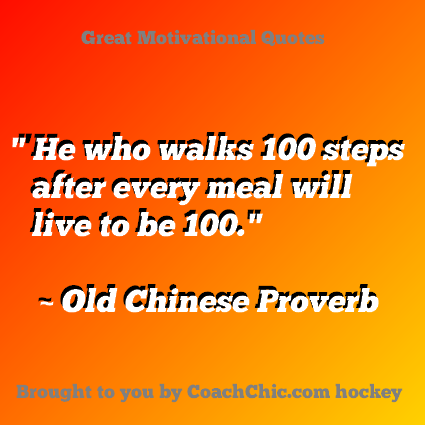
Some months ago, I thought it a good idea to follow an inspirational message found on my Great Motivational Quotes page.  In effect, an old Chinese proverb says that walking a hundred steps after every meal will help one live to be one hundred.  (Ya, those old proverbs stretch things a bit, but maybe not a lot.)  So, almost every night since, Brenda and I have reminded each other that it's time to take our nightly walk (after our biggest meal).

More recently, something else struck me -- days before Sean's newsletter arrived in my inbox.  Maybe a week ago, Brenda and I decided to start spending an hour or so each midday afternoon taking advantage of the awesome Florida weather.  So, we started going to the pool -- sometimes to do a little paperwork or to hash over ideas, and sometimes to do absolutely nothing but soak in the warm, Florida sun.  I think we missed one day since then, and I felt that miss take a tiny toll on my psyche.  I mean it.  I've tried to remind Brenda of the fact that my somewhat-retirement and freelance writing has given us the luxury of taking breaks pretty close to when we want.  Oh, I am still a keyboard-working fool, but that doesn't force me to punch a clock.
Now, let me tell my readers something, and I'm dying for Sean D'Souza to comment on this one, too...  For, I don't think his walks to the coffee shop each morning -- or my time at the pool -- would supply nearly as much happiness if our significant others weren't also enjoying it, or helping to make such events happy ones.  So, from my side of it, at least, I'm thankful Brenda seems to be enjoying both the walks and the pool time as much as I am.          
Oh, our little buddy Raggs, at over 16-years old, requires lots of walks -- about twenty times through the day and night.  Most of the time we make those walks together -- the three of us, and we're laughing all the while.

Then, there's my work...  It's mainly writing nowadays, with the occasional audio or video production mixed in between.  I've said it often, too, that I could get lost in that work -- just keep me supplied with cold soda or hot coffee, toss me an occasional sandwich, and I'm as happy as a lark.
Want to know when I'm not enjoying my work?  It's when I'm forced to have other things on my mind.  I mean, let's face it, one can't get lost in even the most enjoyable project if there's a ton of crap being dumped on his or her head.  
From a personal perspective, I've learned to "compartmentalize" all I need to pay attention to -- as in dealing with the un-fun stuff for a time, and then eventually blocking that out and freeing my mind so I can dwell on my creative work  If anything can go wrong with that, it's having someone interrupt me with gut-wrenching stuff while I'm trying to be creative..
Over at least 40-years in coaching, I've depended on a hardcopy diary for my appointments, obligations, lists of todos, etc.  Only months  ago, however, I switched to Google's online Calendar.  And, you'd better believe that our daily time at the pool and our nightly walks are plotted right in there.  In a way, they're meant to be obligations, just so I'm not so apt to get rapt in my work and forget what just might be the most important times of my day.  Said yet another way, I'd have to ask, Why am I working long hours if not to free myself for occasional moments of happiness?

Lastly, Brenda and I laughed out loud at Sean's use of the word "mundane".  That was one of my favorite terms when we first met.  For, I told her that anyone can get along during exciting times, but the test would be when all the mundane times came along.  Really, almost everything we do over the course of 24-hours is mundane.  I mean, few of us experience constant excitement.  In a way, our time at the pool qualifies as mundane, as do the nightly strolls, and the walks with Raggs.  So, can we laugh most of the time?  The answer, without question, is a resounding, "Yes!"  As a matter of fact, we laugh nearly all the time!

*
Visit Sean D'Souza's website for much more awesome advice...

http://www.psychotactics.com/

Click this link for Sean's podcast and article on Three Obstacles To Happiness (plus many more podcasts).
*
Want to know what I'll be doing tonight -- after our nightly walk?  Visit CoachChic.com, my Hockey Podcast, and the rest of my posts here in Coach Chic's Hockey Diary.


Wednesday, March 11, 2015

Whole Body Vibration

Anyone who knows me knows that I'm a workaholic.  Truth be known, though, I love what I do -- researching and writing, researching and creating new hockey training methods.  Still, I firmly believe that it's possible to get tons of work done, while also enjoying life.  And, while that might be a whole 'nother subject for another day, let me just say that Brenda and I try to fit at least a few minutes of active relaxation into each day -- a couple of times per day.

With that, we decided to take a few minutes today to sit at poolside.  On the way, I happened to grab a free newspaper-like publication at the clubhouse for something to browse while catching some sun.  That publication, called "Lifestyles", is aimed at keeping the local senior set up on activities, but it also carries a number of articles on health issues.  And, while thumbing through, something jumped off one page and caused me to start reading aloud to Brenda, opening with, "Get a load of this..."

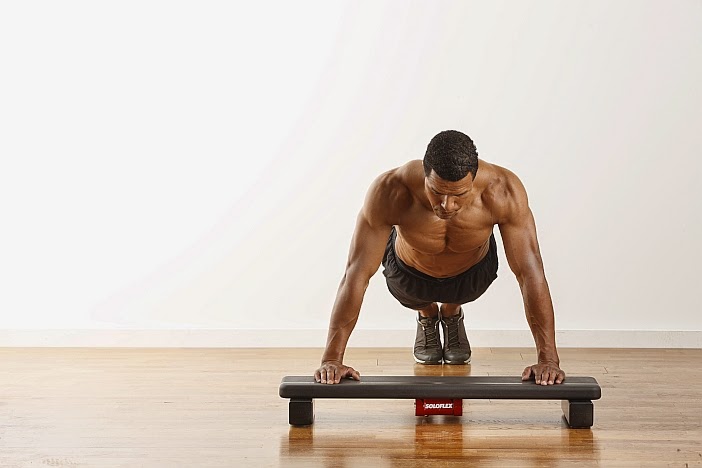
Within a few sentences, we both recognized the article's description of a gadget called the "LivMD" as something we've used quite a bit.  "The application of LivMD is known to aid microcirculation in muscles, to stimulate stem cell activity, to facilitate healthy muscles and bones, and to encourage lean body mass over adipose tissue."  Yup, what it was describing was something I've owned for a number years, that being a (Soloflex) "whole body vibration" machine.

Now, it's probably been about a dozen years since I first learned about something also referred to as "WBV".  Actually, I can't even remember how I happened upon such a process, or such a device.  A lot of research did bring me to some pretty interesting background information, though...

One website traces WBV to the old Soviets... "The world first caught a glimpse of the results of Whole Body Vibrational-training when the Russians began to win most of the Gold Medals at the 1960 Olympic Games. Next, they found they could keep their cosmonauts in space for an extended period. Soon it was over a year longer than the United States could. The Soviets kept the technology of whole body vibration a secret until after the Berlin Wall came down in November 1989.  In fact, it took over 30 years for the rest of the world to discover the secret to Russia's Olympic and outer-space achievements."   

Yet another website states that "A new treatment under study by NASA-funded doctors could reverse bone loss experienced by astronauts in space."  And, of course, they're talking about Whole Body Vibration.  (I just completed a podcast that will include an audio presentation from Science at NASA, and you can hear that as "Episode 23 - Whole Body Vibration for Strength Gains" on my podcast sit.)

I could go on about the scientific literature here.  However, here's the Conclusion from one scientific study...
"The use of vibrations in an athletic setting offers new possibilities to coaching science. Resistance training effectiveness has been demonstrated due to the possibility of enhancing neuromuscular performance, power output. strength and hormonal profile. However. the time needed for these adaptations to occur is relatively long as compared to the possibilities offered by vibration treatments. It should be recognised however, that vibrations need to be viewed not as a substitute tool of resistance exercise but as a valid additional means to be implemented in a training routine in association with all the other traditional methodologies nowadays utilised. New studies need to be conducted to analyse chronic responses. different treatment protocols and the effects of the association of vibrations with conventional training means for improving the knowledge in this interesting and exciting tool of sports science."
Now, here's my unscientific impression, based on a ton of reading over the years, and the main reason I purchased my own WBV machine...  It's my understanding that whole body vibration recruits far more cells than a traditional exercise, and that those cells go through far more actions because of the vibrations.  Consequently, I've read that a few minutes of whole body vibration work can produce results that normally would take numerous reps and sets with heavy resistance.

Today, whole body vibration technology is being utilized for health and fitness, recovery and rehab, sports performance and anti-aging puproses, on a Global scale.  Everyone from the elderly, the person with physical disabilities, to the general person looking to get toned and healthy is using this form of exercise.

Lastly, I've brought this interesting method of training to light mostly as an FYI.  As you might know by now, I tend to drift into areas of science that few other hockey coaches would even know about.  As a matter of fact, I wrote the following article (to include three unbelievable videos) for CoachChic.com ages ago:  "Whole Body Vibration Strength Training".